
Why Place Matters
Loving Where You Live

Let me tell you about the place where I grew up.
The Panhandle of western Nebraska is part of the Great Plains, and I was raised on a farm surrounded by flat prairie and sandhills. Trees are not a natural feature of this area; after the Dust Bowl in the 1930s saw the erosion of so much soil, many trees were planted on the prairie as “wind rows” or “shelterbelt” to protect livestock, homes, and crops from weather and erosion. The economy is agricultural to its core; ranching and farming are in nearly everyone’s blood. Small towns dot the Panhandle, from tiny villages to more moderate-sized. There are no cities here. The closest city, Denver, Colorado, lies 3 hours to the southwest.
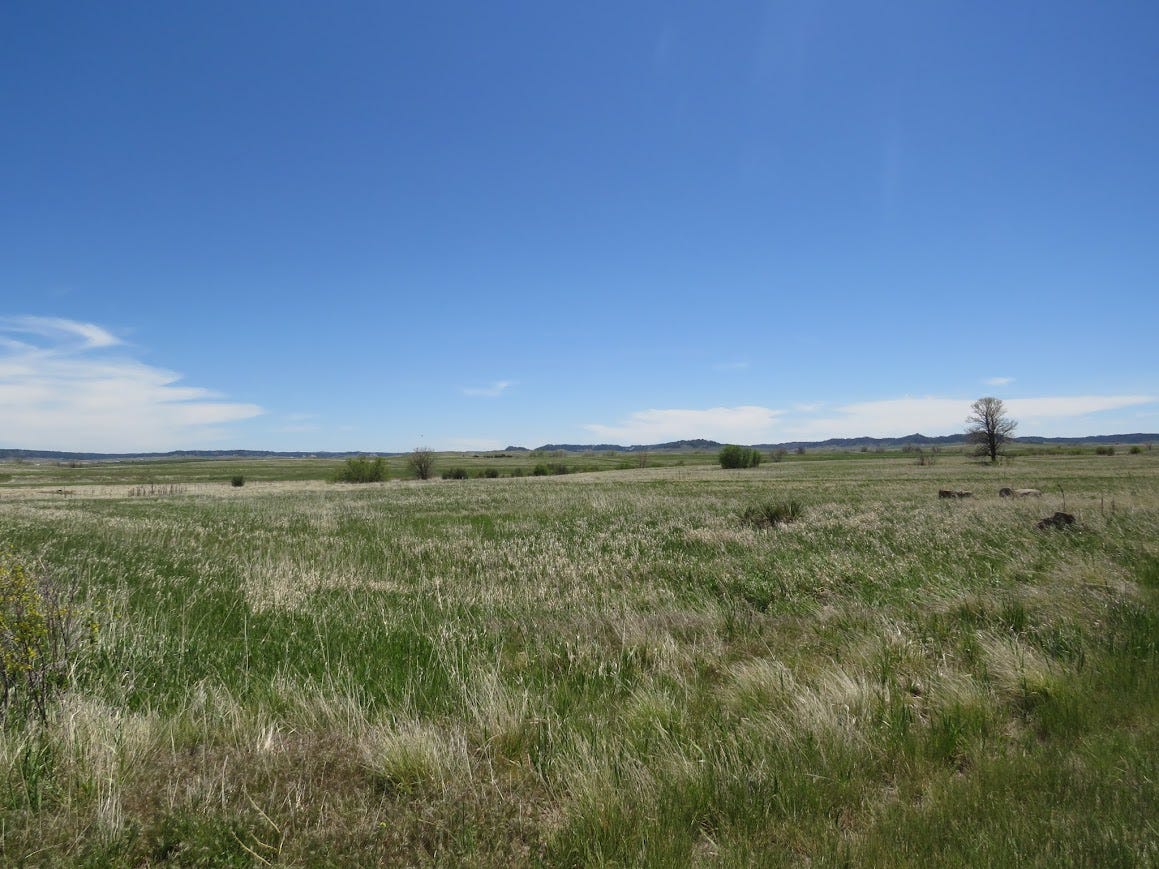
Some people absolutely love living here. The pace of lifer is slower, neighbors rely on each other, and there’s a sense of community. That also comes with its challenges as diversity is decidedly lacking in many ways, and in the smaller communities, everyone knows everybody’s business. But there is a stark beauty here, with sandstone and limestone buttes and other rock formations jutting up from the land, and gently, rolling prairie in other areas.
The history of the area mostly centers around the Native peoples indigenous to the land, pioneers, and homesteaders. But to me, it was boring. From a young age I read historical fiction set in 18th and 19th century Europe, and America in the Colonial, Revolution, and Civil War periods. Growing up, this is the history that fascinated me. Unfortunately, I didn’t live where any of this history happened. I felt stifled, frustrated, and bored. Seeing wagon ruts or 19th century military forts didn’t thrill me. While there were museums, they focused, naturally, on the history of the area. Culture was limited. No symphonies existed, and getting a big-name performer was a pipe dream. I escaped by reading books, watching movies, and dreaming of the day I could leave home, go explore the world, and eventually live somewhere that fit me.
Life has a way of derailing our plans. At the age of 27, I moved to a city in eastern Nebraska, earned my MA in history, and stayed for the next 22 years. (Perhaps some day I will write how western and eastern Nebraska are radically different, but that is a post for another day.) The city gave me a faster pace of life and anonymity, which I enjoyed. The landscape was lush with trees, lakes, and rolling, green hills. It also offered more culture - I was able to see London’s The Academy of St. Martin’s in the Fields orchestra, plays, and other national and international performers, plus some very nice museums.
But. . . I still didn’t feel like I was in the right place. Nebraska is very politically and socially conservative, with an entire economy mostly based on agriculture. Sports, not culture, dominates the state’s identity. The University of Nebraska football team, the Cornhuskers, is the state religion. You think I kid? I do not. Nebraska has no national sports teams, so the university football program is the team to watch. People plan their weddings around the football schedule. If you do have a wedding on game day, you better be damn sure you have some way for your guests to watch the game.
After my divorce in 2017, and the end of a relationship in 2024, I needed to make a huge change in my life. I wanted to be in a place that didn’t stifle me, that didn’t drain me, but energized me, where I felt inspired by just being there. So, I decided to move someplace I’d wanted to live since I was a kid: Williamsburg, Virginia. (If you’re curious, you can read what led up to that decision in this post.)
I’ve now lived here for an entire year. (I still can’t believe it!).
And you know what? This place gives me everything I’ve ever wanted.
Living Where It All Started
Even though I’ve spent my career as a historian researching World War II, the 18th century has long been my first love. And as such, I’m not sure there’s a much better place to live in America than Virginia. I live in what’s known as the Historic Triangle. We have Colonial Williamsburg (Williamsburg was the capital of the Virginia colony), Jamestown (the site of the first successful English settlement in 1607), and Yorktown (where Cornwallis surrendered to Washington, ending the Revolution in North America). But that’s just a smattering of all the history to be found in this state. The Civil War figured heavily in Virginia history, with both the Union and the Confederate capitals located here. Battlefields, from the American Revolution through the Civil War, are everywhere.
I’ve stood on the banks of the James River at the Jamestown settlement and just soaked in the fact that more than 400 years ago, people from England who made the arduous journey stood in the very same spot. So did Indigenous peoples and the enslaved. America’s is a complicated history, and the more I learn about how these cultures and people intersected, in both wonderful and terrible ways, the better I understand this country. To be in the places where it happened, to stand there and actually feel it, is something incredibly powerful.
I’ve learned so much about the history of Black and Indigenous peoples in this region, something my high school history courses barely touched upon. These are narratives and diversities that I didn’t grow up around, and never even considered. I was that naive child who read Gone with the Wind, loved the movie, and thought the South was this glamorous, romantic place. Oh how terribly, terribly wrong I was. When you live in a place, and you understand the truth about it, (or rather, are taught the truth instead of the white-dominated narrative) the souls of those who lived there imbue the air, the earth, the trees. You can feel them. You can feel the hope of those building a new life here, who left Europe and took a wildly dangerous chance to start over in a brand new world. But you can also feel the pain, torment, and rage of the enslaved; and the anger and the injustice of the Indigenous peoples. All of it is here. It is tangible wherever you go.
I felt some of that in western Nebraska: the pioneer spirit pervaded the area, the “pull yourself up by the bootstraps” and “work hard” mentalities were part of everyday life. But even though I lived smack dab in the middle of the Great Plains, the terrible price the Native peoples paid was barely acknowledged by many of the people who lived there. I hope that has changed. I really do.
No Longer Stifled
When I moved, I made a list of steps I wanted to follow in this new life.
Here’s #3: Think deeply about place and how it affects me and my mental/physical health.
Two months after my move, I wrote this about step #3: “But I feel more positive overall. There’s so much to do here, and I feel much more intellectually stimulated.”
While living in Williamsburg, I’ve attended lectures, gone to museums and historic sites, and learned to see and think differently about America’s founding. On Christmas Eve, I attended a concert of 18th century Christmas carols at Colonial Williamsburg. The musicians were dressed in 18th century attire. As I listened to the delicate notes of the harpsichord, my spirits soared and I thought, “This is where I belong.” I’ve been listening to classic music since I was in middle school. To hear that instrument played on a stage not ten feet from me, in a place where those songs would have been played 250 years ago, hit me deep in my soul.
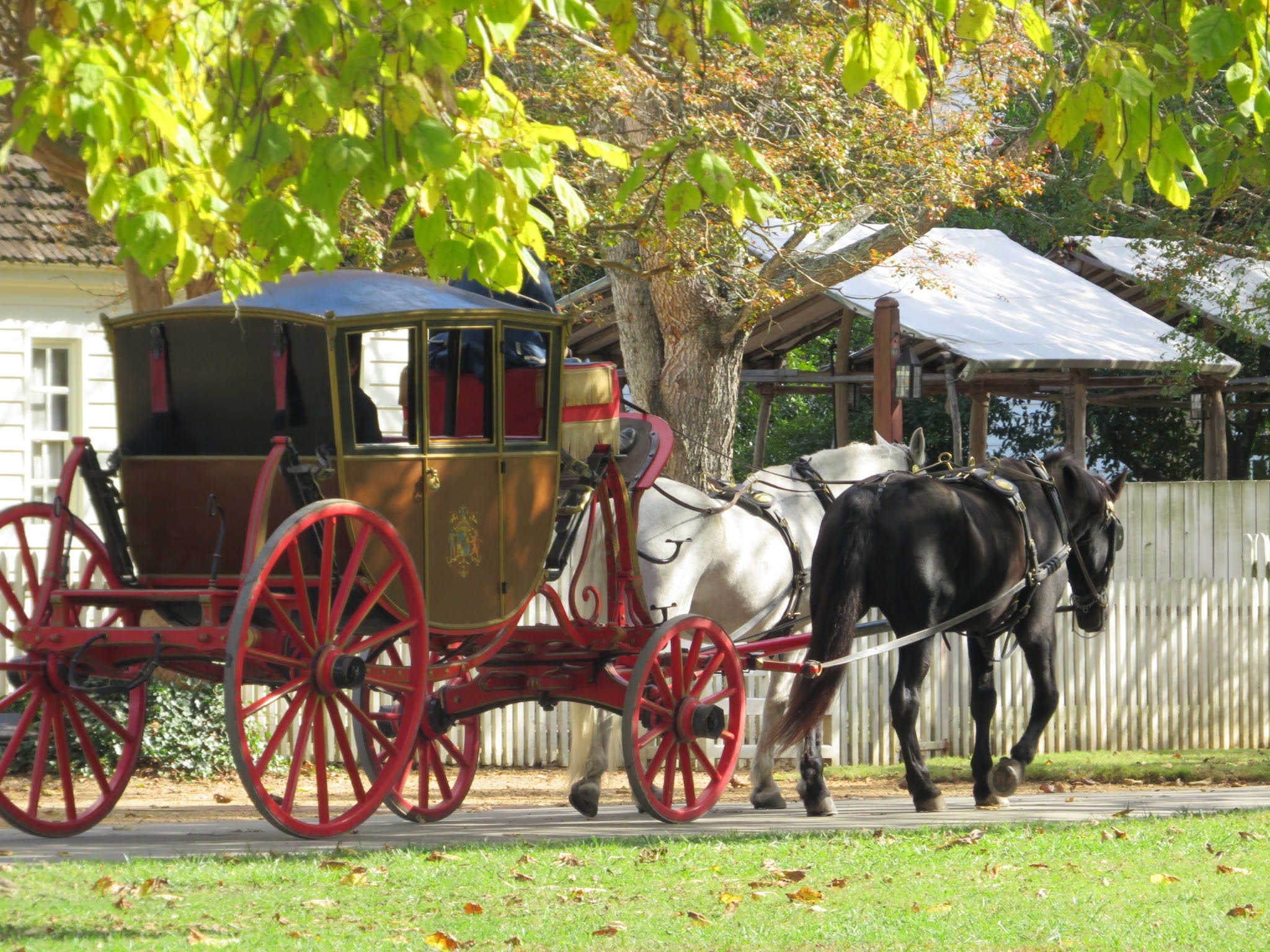
And living in a place where there are so many trees, lakes, and rivers is amazing. It is so odd to me to be driving through town and go through a forested area where there are no homes or businesses, only to then emerged into a shopping center or neighborhood. That just isn’t the case in Nebraska! (Also, many towns are laid out pretty much on a grid in Nebraska - not so here!). I’ve had to learn to adapt to the weather and the environment as it is quite different from Great Plains weather. I do admit to missing that great Nebraska sky, though, where one can see for miles and miles with nary a tree to distract your view.
The area where I now call home has recharged me and revitalized me in ways I couldn’t have foreseen. Do you know what it’s like to live in a place that values, protects, and celebrates history and the arts and humanities? Now I do. The entire vibe is different here. While the College of William and Mary has sports teams, it’s not the college’s focus, or the community’s. Instead, it is culture: music, the arts, history, theater, and literature. Since I love all of those things, and always have, this has given me a sense of peace and contentment with where I live. I never had that living in Nebraska. In fact, I’d go so far as to say that the state of Virginia doesn’t put sports over anything else. How refreshing it is! (Please don’t get me wrong - there’s nothing wrong with sports. I just like to live in a place where it’s not the priority.)
At the age of 50, I am finally living in a place that matters to me, that nourishes, stimulates, and fulfills me. It has made a huge difference in my life. For the first time, I can say, “I love where I live.”
To that little girl who used to lay curled up on her bed, reading stories about the American Revolution or the Civil War, who dreamed of visiting those places, of living there, of being immersed in history, I finally made your dreams come true.
This was so lovely. Williamsburg is among my favorite places to visit, and I also dream about living there. It’s such a beautiful place!
As someone who can walk 15 minutes and be among buildings Jane Austen would have known, I’d never considered that there might be places without history. We are somewhat spoilt for history here in the UK!